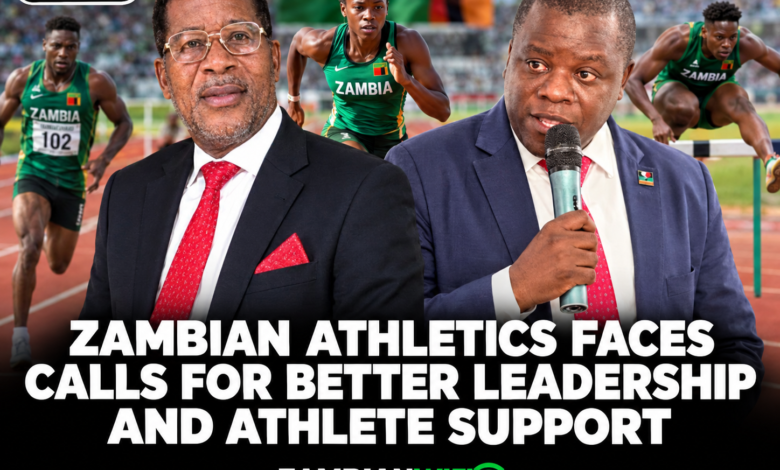
There are growing concerns over the way athletes are being supported when representing Zambia at national and international competitions, with calls for stronger leadership, better athlete welfare and greater accountability within Zambia Athletics.
Critics argue that athletes should not be left to shoulder significant costs associated with representing the country, particularly expenses such as air tickets and other logistical requirements for national assignments.

Zambia Athletics is currently headed by Major Bernard Bwalya, who took over from longtime president Elias Mpondela after Mpondela announced in 2025 that he would not seek re-election following 26 years in office.
The criticism centres on whether enough resources are being mobilised to ensure athletes can compete without having to finance national duties from their own pockets.
CALL FOR GREATER GOVERNMENT SUPPORT
Those raising the concerns say representing Zambia should be treated as a national responsibility, with the Ministry of Youth, Sport and Arts and the national athletics governing body working together to provide the necessary financial and logistical support.
They argue that athletes already carry the burden of training, competition and preparation, and should not additionally be expected to finance essential travel and other expenses when selected to represent the country.
The concerns come despite Zambia Athletics outlining fundraising and development initiatives. In April 2026, the association launched the Inter-Company Relay with a target of raising K2 million, with the funds intended to support youth development, talent identification, preparation for regional and international competitions and the strengthening of provincial athletics structures.
Zambia Athletics has also highlighted recent competitive achievements. At the 2026 CUCSA Games in Gaborone, Team Zambia won eight athletics medals — four silver and four bronze — according to the association’s president.
However, critics maintain that medal performances should be accompanied by stronger athlete welfare systems and sustainable support structures.
ATHLETES DESERVE BETTER, CRITICS SAY
The argument is that Zambia cannot consistently produce champions if promising athletes are forced to overcome financial barriers simply to get opportunities to compete.
There are also calls for the association to provide a clear long-term development plan covering grassroots talent identification, coaching, athlete welfare, competition preparation and international exposure.
Stakeholders are therefore being urged to examine how resources for athletics are mobilised and distributed, while ensuring that athletes remain at the centre of Zambia’s sporting development agenda.
The message from critics is straightforward: Zambia has the talent, but athletes need a system that adequately supports them if the country is to turn that talent into sustained international success.