Zambia 2026 Election: Allegations of Violence, Irregularities and a Growing Legal Battle

By Petteri Häkkänen – International Election Observer Missions Expert
Zambia’s August 13, 2026 general election has become the subject of intense controversy following allegations of electoral irregularities, political violence, security crackdowns and concerns raised by opposition figures and election observers.

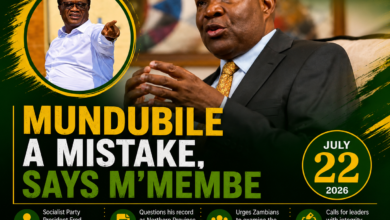
President Hakainde Hichilema was declared the winner of the presidential election with approximately 60 percent of the vote, while opposition candidate Brian Mundubile reportedly secured around 38 percent. Mundubile and his political allies have rejected the outcome and are preparing a legal challenge, arguing that the electoral process was affected by serious irregularities.
The allegations surrounding the election have placed Zambia’s democratic institutions under intense scrutiny.
Raid on Mundubile Campaign Media Centre
One of the major incidents reported ahead of the election was a raid on a media command centre associated with Brian Mundubile’s campaign team in Ibex Hill, Lusaka.
According to Makebi Zulu, Mundubile’s running mate, heavily armed individuals who identified themselves as police officers entered the premises searching for equipment allegedly being used for Parallel Vote Tabulation (PVT).
Zulu alleged that live ammunition was discharged during the operation and questioned why a campaign media operation would be targeted.
Brian Matambo, the alliance’s media director, also reportedly confirmed that gunshots were fired during the incident.
The government and security agencies have linked some of their operations to investigations into an alleged plot to interfere with the electoral process and threaten national security. However, Mundubile’s camp has disputed the allegations.
Concerns Over the Electoral Playing Field
The election also attracted scrutiny over the broader political environment in which the vote took place.
According to concerns attributed to international election observers, issues surrounding the advantages of incumbency, access to state media, political intimidation and the timing of electoral reforms formed part of the wider debate over whether all candidates competed under equal conditions.
The European Union Election Observation Mission reportedly raised concerns regarding the political environment, including the implementation of electoral reforms shortly before the election and allegations involving pressure and intimidation against political actors.
These concerns have strengthened calls for a comprehensive review of the entire electoral process rather than focusing solely on the final vote totals.
Counting Suspension Raises Questions
A major flashpoint emerged on August 14 when the Electoral Commission of Zambia suspended aspects of the counting and announcement process following reports of violence involving electoral officials and allegations concerning ballot papers.
The suspension reportedly lasted for several hours and created uncertainty among political parties, observers and members of the public.
According to the account presented by the article’s author, some observer missions questioned whether the scale of the disruption justified the wider suspension.
The period following the suspension has become particularly important because opposition parties have raised questions about the verification of figures entered into the electoral system and the relationship between electronic results and physical tally sheets.
Post-Election Arrests and Security Operations
The post-election period has also been marked by arrests and security operations involving individuals linked to the opposition.
Authorities have maintained that the operations were connected to investigations into serious threats to national security, including allegations involving weapons and an alleged militia network.
However, Mundubile and his allies have rejected those allegations, describing the operations as politically motivated.
The situation reportedly attracted concern from the United Nations High Commissioner for Human Rights, with calls for due process and protection against arbitrary detention.
Among the issues generating particular concern are reports regarding the detention and questioning of opposition-linked figures, including political leaders, lawyers and other individuals connected to the post-election dispute.
Death of Former Minister Mutotwe Kafwaya
The security operation was further overshadowed by the death of former Cabinet Minister Mutotwe Kafwaya.
Conflicting accounts reportedly emerged regarding the circumstances surrounding the shooting.
The government has maintained its position regarding the security operation, while opposition figures and human rights organisations have called for an independent and transparent investigation into the circumstances surrounding Kafwaya’s death.
The incident has added another layer of tension to an already volatile post-election environment.
Legal Challenge Against the Presidential Result
Brian Mundubile and his alliance have indicated that they intend to challenge the presidential election results through the courts.
The proposed legal challenge is expected to raise issues including alleged irregularities in the handling of ballot materials, the management of election results, the role of security agencies and concerns about access to electoral information.
The petition will ultimately place the judiciary at the centre of one of the most significant political disputes Zambia has faced in recent years.
For the opposition, the legal process represents an opportunity to test allegations of irregularities through constitutional and judicial mechanisms.
For the Electoral Commission of Zambia and the government, the proceedings could provide an opportunity to respond formally to the allegations and defend the integrity of the electoral process.
A Critical Moment for Zambia
Regardless of political affiliation, the controversy surrounding the August 13 election represents a major test for Zambia’s democratic institutions.
The credibility of an election does not depend only on the final percentage announced. It also depends on public confidence in the entire process—from campaigning and media access to polling, counting, verification, security operations and the resolution of disputes.
Allegations alone do not establish wrongdoing, and all claims must ultimately be tested against credible evidence and the law. Equally, serious concerns raised by political actors, civil society organisations and election observers require transparent and credible responses.
As the legal and political processes unfold, Zambia faces a defining moment.
The manner in which institutions respond to allegations of violence, electoral irregularities, arrests and the disputed presidential result could have consequences extending far beyond the 2026 election.
The coming days may determine not only the outcome of the election dispute, but also public confidence in Zambia’s democracy, electoral institutions and commitment to the rule of law.