Rev. Walter Mwambazi Calls for Fair Trial in Zambia Treason Cases

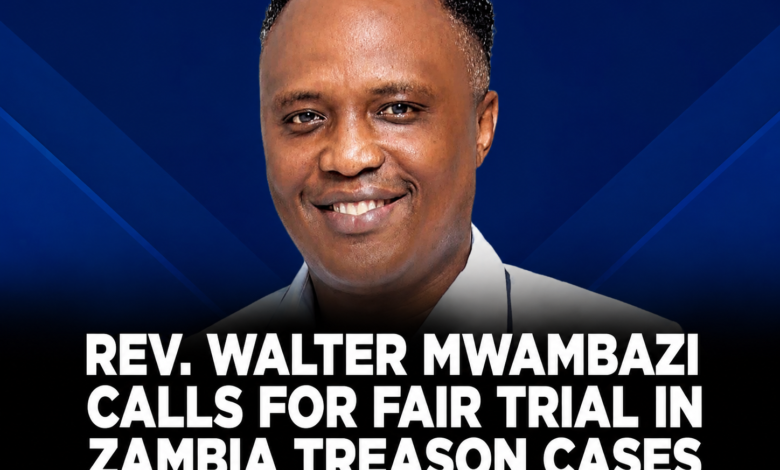
Rev. Walter Mwambazi has called for justice, due process and fairness in the handling of treason charges involving opposition-linked figures, urging the State and the courts to ensure that justice is not only done but is also seen to be done.
In a reflection titled “My Reflection on Zambia’s Treason Charges—Justice Mustn’t Just Be Done, But Must Be SEEN to be Done!”, Rev. Mwambazi said the ongoing case should be approached with caution, fairness and respect for the rule of law.

His comments come amid public debate surrounding the treason charges and questions about the circumstances under which opposition figures who had sought protection at a United Nations facility were subsequently handed over to Zambian authorities.
Mwambazi: Justice Must Come First
Rev. Mwambazi argued that the State must be required to present its case openly and without manipulation, while the judiciary must determine matters based on truth and evidence.
He outlined three principles that he believes should guide the process:
- The State must prove its case openly and without manipulation.
- The courts must uphold truth without fear or favour.
- Citizens must demand fairness rather than vengeance.
According to the clergyman, the credibility of the justice system is particularly important when dealing with serious allegations such as treason.
He warned that denying justice could have consequences beyond the individuals facing charges, potentially affecting public confidence in Zambia’s democratic institutions.
Questions Over the UN’s Role
Rev. Mwambazi also reflected on the role of the United Nations in the matter, noting that questions have been raised over why individuals who reportedly sought protection through a UN facility were subsequently released into the custody of Zambian authorities.
He acknowledged that international organisations can face difficult decisions when balancing the need to protect individuals with concerns about maintaining peace and avoiding confrontation with national authorities.
He compared the dilemma to the biblical account of Pontius Pilate, describing it as a situation involving competing political and moral responsibilities.
‘If They Are Guilty, Let Truth Convict Them’
The clergyman urged Zambians to allow the courts to determine the facts rather than reaching conclusions before the cases are heard.
“If the accused are guilty, let truth convict them. If they are innocent, let truth vindicate them.”
He said the ultimate objective should be for Zambia to emerge from the situation stronger and more united, regardless of the eventual outcome of the cases.
Rev. Mwambazi further warned that the treason proceedings could deepen divisions in the country if they are perceived as politically motivated or unfair.
Calls for Prayer
As a religious leader, Rev. Mwambazi also called on Christians to pray for those facing the charges, the judiciary and Zambia as a whole.
He urged citizens to pray that the accused receive a fair hearing, that judges act with integrity and that justice contributes to healing rather than further division.
He concluded by reiterating his original call:
“May all those charged with TREASON by the STATE get their FAIR DAY IN COURT.”
Rev. Mwambazi said the treason cases are not merely about the individuals facing prosecution, but also raise broader questions about the strength of Zambia’s democracy, the rule of law and the country’s ability to resolve political disputes through lawful institutions.